A rectal prolapse can make sitting, commuting, working and using the toilet uncomfortable because rectal tissue moves out of position and bowel emptying becomes difficult. By the end, you will know how to recognise the condition, which symptoms need prompt care, how doctors confirm it and when treatment can improve comfort beyond simply correcting a visible bulge.
Key takeaways
- Rectal prolapse differs from piles because the rectal wall protrudes through or toward the anus.
- Track protrusion, incomplete evacuation, leakage and discomfort before your specialist appointment.
- A specialist assesses prolapse type, severity, bowel function and overall health before recommending treatment.
- Surgery becomes relevant when prolapse persists, worsens or disrupts bowel control and daily activities.
What rectal prolapse is—and how it differs from piles
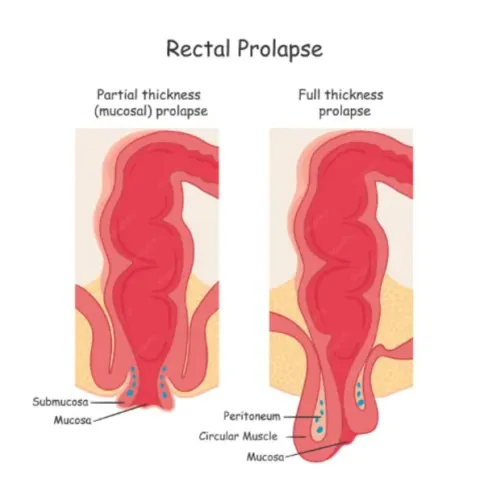
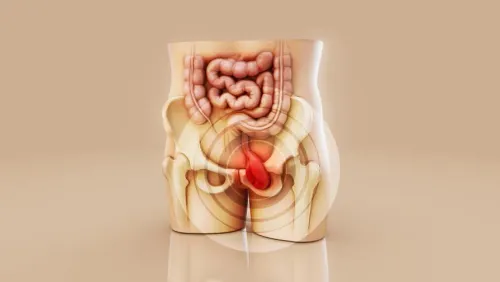
Rectal prolapse occurs when part or all of the rectal wall protrudes through the anus. A partial or internal prolapse stays inside but can obstruct evacuation; a complete external prolapse appears as tissue outside the anus. Full-thickness prolapse contains every layer of the rectal wall, unlike piles, which are swollen vascular cushions.
| Type | What it means | What you may notice |
|---|---|---|
| Partial or internal prolapse | Rectum slips inward but remains inside | Obstructed evacuation or incomplete emptying |
| Complete external prolapse | Full-thickness rectum protrudes through the anus | Visible tissue and possible need to push it back |
| Mucosal prolapse | Only the rectal lining protrudes | Mucus, bleeding or a smaller bulge |
| Rectal intussusception | Rectum telescopes inward | Difficult evacuation; defaecography may identify it |
Recognisable symptoms include:
- A bulge during straining
- Mucus discharge, bleeding or soreness
- Incomplete evacuation and repeated toilet visits
- Constipation or faecal leakage
- Needing to push tissue back manually
These symptoms can resemble piles, so examination matters. The benefits of rectal prolapse treatment depend on identifying whether the problem is prolapse, haemorrhoids or another pelvic-floor disorder.
How prolapse disrupts comfort during an ordinary Mumbai day
A protruding bulge can turn an ordinary Mumbai commute into a series of uncomfortable adjustments. Sitting at a desk, riding in a car or train, walking between stations, or exercising may cause pressure, soreness or the fear that tissue will come out further.
- Shift position repeatedly during work because sitting increases discomfort.
- Avoid crowded trains, long car journeys or walks between stations.
- Stop exercise because movement, lifting or straining triggers the bulge.
- Search for toilets before meetings, errands or social plans.
Mucus or faecal leakage adds practical problems: stained underwear, repeated cleaning and anxiety about odour at work, in public toilets or during social activities. Incomplete evacuation can send you back to the toilet several times, while constipation and straining can make you plan commutes, meetings and outings around bowel movements.
These are among the benefits of rectal prolapse treatment that matter in daily life: easier cleaning, less leakage and greater confidence moving through the day.
Seek urgent assessment if the prolapse cannot be pushed back gently, or if you have severe pain, dark purple or black tissue, heavy bleeding, fever, vomiting, or inability to pass stool or gas. Do not repeatedly force tissue back or delay assessment while trying home remedies; trapped tissue can lose its blood supply.
How a specialist confirms the cause and severity
Assessment establishes whether the problem is external prolapse, internal prolapse, or another cause of difficult evacuation. The clinician asks about constipation, diarrhoea, straining, childbirth, ageing, pelvic-floor weakness, rectal surgery and neurological disease, then asks about leakage, urgency and incomplete emptying.
Examination can include inspection while you strain, a digital rectal examination, and anoscopy or proctoscopy. This shows whether tissue protrudes, how much rectal support is lost, whether the sphincter contracts properly, and whether another lesion explains bleeding or discomfort.
Further tests are chosen when the examination does not show the full problem:
- Defaecography can identify internal prolapse, obstructed defaecation, rectocele, enterocele or intussusception and may change the operative plan.
- Colonoscopy is useful for bleeding or other bowel concerns that need inspection higher in the colon.
- Anorectal manometry measures sphincter pressure and pelvic-floor function when leakage or evacuation difficulty is prominent.
- Pelvic MRI helps clarify anatomy and associated pelvic-floor disease when other findings remain uncertain.
The diagnosis determines whether you need symptom control, pelvic-floor treatment or anatomical repair. If you search for a rectal prolapse specialist near me, ask whether the clinician routinely assesses colorectal and pelvic-floor disease, not only haemorrhoids, and ask which prolapse type is present and why each test is needed.
When comfort measures are enough—and when surgery becomes relevant
Start by reducing straining: drink adequate fluids, increase fibre gradually when appropriate, use prescribed stool softeners or laxatives, and sit on the toilet only long enough to pass stool. Treat constipation or diarrhoea, and ask about pelvic-floor physiotherapy; obstructed evacuation needs individual advice.
These steps improve comfort and support treatment, but do not usually permanently correct established full-thickness external prolapse.
Persistent external prolapse, ulceration, bleeding, faecal incontinence, obstructed defaecation or worsening symptoms make surgery relevant. The choice depends on anatomy, constipation, continence, previous operations, fitness for anaesthesia and recovery priorities.
| Approach | Main trade-off | Usually considered |
|---|---|---|
| Abdominal repair | Open, laparoscopic or robotic; often lower recurrence, but abdominal surgery and anaesthesia add physiological stress | People fit for abdominal surgery |
| Perineal repair | Less physiological stress and sometimes easier hospital recovery, but recurrence can be higher | Older or medically frailer patients |
| Laser procedure | Not a universal replacement for reconstructive prolapse repair; ask which tissue is treated and what evidence applies | Selected mucosal or haemorrhoid problems, not automatically full-thickness prolapse |
For rectal prolapse treatment in Mumbai, ask about the proposed operation, recurrence, pain, bowel function, continence, anaesthesia, hospital stay and follow-up. Someone searching “rectal prolapse specialist near me” can discuss these questions with Dr Manish Dhuris Advanced Laser Surgery before choosing rectal prolapse surgery in Mumbai.
Related service
Surgery ₹1200 Sacral fixation of posterior Rectal wall it is one of the best therapy recommended for Partial or complete Rectal Prolaps. View service → |
What improvement to expect after treatment
Successful repair should reduce how often tissue comes out and make cleaning easier. Mucus leakage and soreness can ease, toilet visits can become less repetitive, and confidence can return when sitting, commuting, working, exercising or using public toilets. These are practical benefits of rectal prolapse treatment, not just changes on an examination.
Recovery depends on the operation. Minimally invasive abdominal rectal prolapse surgery in Mumbai may shorten hospital recovery compared with open surgery; a perineal procedure can involve less physiological stress when abdominal surgery carries greater risk. Bowel function can take weeks or longer to settle after either approach.
Repair does not guarantee normal bowel function. Long-standing sphincter, nerve or pelvic-floor damage can leave faecal incontinence, while constipation can persist or worsen after some repairs. Follow-up checks recurrence, urgency, constipation and leakage, then guides medicines or pelvic-floor care.
Seek assessment early if symptoms disrupt ordinary activities. Seek urgent care for:
- Tissue trapped outside or impossible to push back gently
- Severe pain, dark purple or black tissue, or heavy bleeding
- Fever, vomiting, or inability to pass stool or gas
Do not repeatedly force tissue back or delay care with home remedies.
Frequently asked questions
What is the difference between rectal prolapse and piles?
Rectal prolapse occurs when part or all of the rectal wall protrudes through the anus. Piles are swollen vascular cushions, not a protrusion of every rectal wall layer.
How can rectal prolapse affect an ordinary day in Mumbai?
It can cause discomfort while walking, sitting or travelling, along with incomplete evacuation, mucus, leakage or the need to manually reduce protruding tissue.
How does a specialist confirm rectal prolapse?
The specialist reviews your symptoms, examines the anus and rectum, and assesses whether the prolapse is partial, internal or complete and full-thickness. Further tests may assess bowel function or identify another cause.
When does rectal prolapse need surgery?
Surgery becomes relevant when prolapse persists, worsens, cannot be comfortably reduced, or causes bowel-control problems and repeated disruption despite conservative measures.
What improvement can you expect after rectal prolapse treatment?
Successful treatment aims to reduce protrusion and discomfort and improve evacuation, continence and confidence during everyday activities. Recovery depends on the procedure and your health.
Keywords