Rectal tissue coming through the anus can indicate full-thickness prolapse, mucosal prolapse, internal intussusception, or a different condition such as haemorrhoids. The correct treatment depends on the diagnosis, bowel function, medical fitness, and whether the prolapse is causing urgent complications; the sections below map out the assessment, tests, operation choices, preparation, and specialist questions involved.
Key takeaways
- Confirm whether the protrusion is rectal prolapse, haemorrhoids, or another condition.
- Expect a physical examination and tests selected to assess bowel function and anatomy.
- Sacral fixation attaches the rectum to the sacrum to restore support.
- Ask about the surgeon’s colorectal training, procedure volume, risks, and follow-up plan.
What condition is actually being treated?
The diagnosis depends on what is protruding, not simply on a lump or bleeding. Doctors classify the problem before discussing rectal prolapse treatment options in Mumbai because each condition requires a different approach.
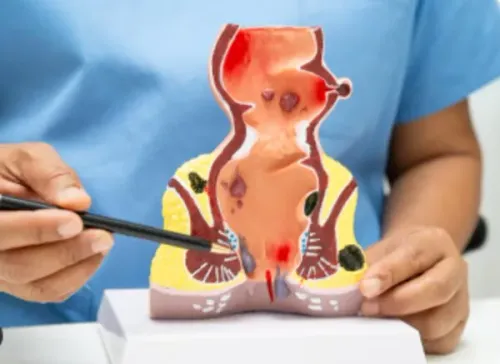
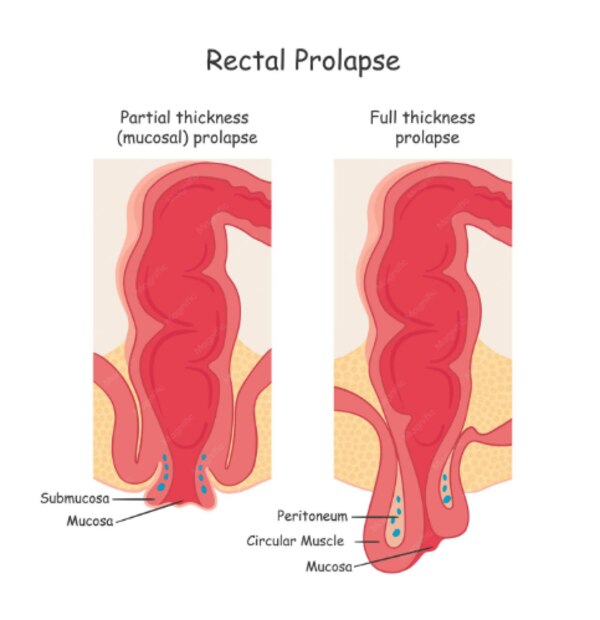
1. Full-thickness external rectal prolapse occurs when every layer of the rectal wall slides through the anus. You may see a circular, moist mass during straining that later needs manual replacement.
2. Mucosal prolapse involves only the rectal lining. It usually appears as a smaller fold or partial ring and is not the same as complete prolapse.
3. Internal rectal intussusception folds inward inside the rectum, so no tissue may appear outside. It can cause obstructed evacuation, incomplete emptying, constipation, urgency, mucus, or repeated straining.
4. Haemorrhoids are enlarged vascular cushions. They can bleed, swell, or protrude, but they are not interchangeable with rectal prolapse.
Bleeding, mucus, tissue appearing during straining, faecal leakage, urgency, and incomplete emptying help classification. If an episode is intermittent, take a clear photograph or video while standing or straining; a normal examination between episodes does not exclude prolapse.
Seek urgent assessment for painful tissue that cannot be pushed back, dark or black tissue, severe bleeding, vomiting, or inability to pass stool or gas. These signs need urgent care, not a routine appointment.
What happens during assessment and testing in Mumbai?
A complete consultation decides whether surgery is appropriate by matching your symptoms, examination, and test results—not by ordering every test.
For rectal prolapse surgery details in Mumbai, expect the surgeon to ask about tissue coming through the anus, constipation, obstructed defecation, faecal incontinence, bleeding, rectal ulcers, previous pelvic or anorectal surgery, and medical conditions that affect anaesthesia.
The assessment may include:
- Watching you strain on a commode or toilet to identify visible prolapse.
- Examining your abdomen for tenderness, masses, or distension.
- Performing a digital rectal examination to assess tone, tenderness, masses, and rectal support.
- Using anoscopy or proctoscopy when the anal canal or lower rectum needs direct inspection.
A normal examination does not rule out intermittent prolapse. Bring a clear photograph or video recorded during an episode at home; it can show the surgeon what was not visible in the clinic.
Testing is selective, not automatic for every patient. Defecography can demonstrate internal prolapse and pelvic-floor disorders. Colonoscopy can exclude a tumour or other colonic disease. Anorectal manometry measures sphincter pressures and assesses evacuation function when constipation, obstructed defecation, or incontinence needs functional investigation.
Pelvic MRI or other imaging is ordered when the anatomy or associated pelvic-floor problems require clarification. The findings guide the operation choice; no single test determines it for everyone.
How is the operation chosen, and what does sacral fixation mean?
Fibre, adequate fluids, stool-softening treatment, avoidance of prolonged straining, bowel retraining, and pelvic-floor physiotherapy come first when constipation, incontinence, or poor evacuation drives symptoms, or when anaesthesia makes surgery unsafe. Treating chronic constipation or incontinence can improve function, but these measures usually do not correct established full-thickness prolapse in a medically fit adult.
The main rectal prolapse treatment options in Mumbai compare as follows:
| Option | What it means | When it applies |
|---|---|---|
| Non-surgical care | Bowel and pelvic-floor management without anatomical repair | Functional symptoms or unsafe surgery |
| Abdominal rectopexy | Open, laparoscopic, or robotic mobilisation and fixation of the rectum to the sacrum | Often considered for fitter patients |
| Delorme repair | Prolapsed mucosa is removed or folded through the perineum | Selected prolapse with suitable length and anatomy |
| Altemeier operation | Prolapsed rectosigmoid is removed through the perineum | Often considered for longer prolapse or higher-risk patients |
In rectopexy, the surgeon mobilises the rectum and fixes it to the sacrum. “Sacral fixation” therefore means a form of rectopexy, not laser ablation, routine bowel resection, or perineal repair. Sigmoid resection is added only when a redundant sigmoid or substantial constipation makes it appropriate.
Choice depends on age, anaesthetic fitness, prolapse length, constipation, incontinence, previous surgery, bowel anatomy, recurrence risk, and surgeon experience. Posterior fixation can worsen constipation; ventral mesh rectopexy uses less posterior dissection but introduces mesh-related risks. These factors explain what does rectal for prolapse surgery include in Mumbai, rather than the word “laser.”
What preparation, hospital care, and recovery should you expect?
Preparation starts with a medication review. Tell the surgeon and anaesthetist about blood thinners, diabetes medicines, blood-pressure treatment, supplements, allergies, and previous anaesthetic problems. They will give procedure-specific fasting instructions; do not assume every operation needs a full bowel preparation.
- If bowel preparation is prescribed, use the exact product and timing provided by the hospital. Follow its fluid instructions and medication adjustments rather than copying advice from the internet.
- Arrange a responsible adult to collect you and provide transport after anaesthesia. Plan help at home during the first recovery period, including meals, mobility, and access to a toilet.
- Laparoscopic or robotic abdominal surgery uses several small abdominal incisions and requires hospital monitoring. Perineal operations avoid abdominal incisions but still require wound care and instructions for stool-softening, fluids, and avoiding straining.
- Ask for the treating hospital’s written discharge plan, including medicines, wound care, diet, activity, warning signs, and follow-up. Recovery time is not a universal number.
Possible problems include bleeding, infection, urinary difficulty, constipation, altered continence, and recurrence. Incontinence can improve after the prolapse is repaired, but persistent sphincter weakness or pelvic-floor dysfunction may need separate treatment. For rectal prolapse surgery details in mumbai, compare the hospital’s actual postoperative plan rather than relying on a clinic’s promised timeline.
How do you choose a rectal prolapse specialist in Mumbai?
Choose a rectal prolapse specialist in Mumbai by verifying prolapse-specific training and experience, not by selecting the clinic with the strongest “laser” label. Ask whether the surgeon regularly treats full-thickness prolapse, rather than mainly performing haemorrhoid procedures.
| Approach | What it involves | What to clarify |
|---|---|---|
| Abdominal rectopexy | Open, laparoscopic, or robotic mobilisation and fixation of the rectum to the sacrum | Why this route suits your fitness, anatomy, constipation, and recurrence risk |
| Perineal repair | Delorme mucosal repair or Altemeier perineal rectosigmoidectomy | Why avoiding abdominal surgery outweighs its trade-offs |
| Other planned procedures | Mesh, bowel resection, or another rectopexy technique | The exact indication and added risks |
- Request the written diagnosis: full-thickness external prolapse, mucosal prolapse, or internal intussusception.
- Ask for the proposed operation, alternatives, and the reason for choosing an abdominal or perineal route.
- Ask whether the plan includes sacral fixation or another rectopexy, mesh, bowel resection, or perineal repair.
- Discuss constipation, obstructed evacuation, faecal incontinence, rectal ulcers, previous pelvic surgery, anaesthetic risks, recurrence, hospital stay, wound care, and follow-up.
A laser procedure marketed for piles does not establish expertise in full-thickness prolapse, and it should not be assumed to repair it. Dr Manish Dhuris Advanced Laser Surgery belongs on your comparison list only after you verify these answers, the surgeon’s credentials, and the prolapse-specific operative plan.
Related service
Surgery ₹1200 Sacral fixation of posterior Rectal wall it is one of the best therapy recommended for Partial or complete Rectal Prolaps. View service → |
Frequently asked questions
What condition is treated by rectal prolapse surgery?
Surgery treats rectal prolapse, in which part or all of the rectal wall slips down and may protrude through the anus. Haemorrhoids, rectal intussusception and mucosal prolapse require different assessments and treatments.
What testing is used before rectal prolapse surgery in Mumbai?
Assessment usually starts with a history and anorectal examination. Depending on your symptoms, the specialist may request defecography, anorectal manometry, colonoscopy or other tests to assess anatomy, bowel function and causes of bleeding.
What does sacral fixation mean in rectal prolapse surgery?
Sacral fixation, used in rectopexy, secures the rectum to the sacrum to restore its position and support. The surgeon chooses the technique after considering prolapse extent, constipation, incontinence, previous operations and overall health.
What should you expect during recovery after rectal prolapse surgery?
Expect hospital observation, pain control, gradual return to food and movement, and instructions to prevent straining. Recovery time depends on the operation and your health; ask when you can work, drive, exercise and resume normal bowel routines.
Keywords